

No products
FDM Printers
- 3D Printing
- 3D Printers
- 3D Printer Parts
- Nozzles
- Hotends
- Extruders
- Bowden Tubes and Connectors
- Nozzle Wipers
- Filament Cutters
- Build Platforms and Parts
- 3D Printer Motherboards
- 3D Printer Displays
- Power Supply
- Motors and Parts
- Sensors, Limit Switches and Wires
- Fans and Parts
- Belts and Pulleys
- Bearings
- Structural Parts
- Filament Storage and Dryer
- Post Processing Equipment
- Multi Material Systems
- Multi Material Systems Parts
- Enclosure
- Lubricant
- Tools
- Print Kits
- Other
- 3D Filaments
- Resins
- 3D Scanners
- 3D Scanner Parts
- Machines
- CNC
- Manual
- CNC Parts
- Aluminum Extrusion
- Linear Shafts and Parts
- Linear Rails and Blocks
- Lead Screws and Parts
- Ball Screws and Parts
- Racks and Pinions
- Gears
- Bearings
- Couplings
- Belts
- Pulleys
- Belt Pulley Accessories
- Springs
- Screws Nuts Bolts
- Hardware
- CNC Controllers
- CNC Controller Parts
- CNC Motors and Drivers
- Power Supplies
- CNC Wires and Connectors
- Drag Chains
- Sensors and Switches
- Indicators
- Pneumatics, Water and Oil
- Dust Collectors
- Clamps
- Bits
- Plasma
- Lasers
- PLC and HMI
- Other
- Tools
- Power Tools
- Drills
- Rotary & Demolition Hammers
- Grinders
- Jigsaw
- Circular Saw
- Miter Saw
- Table Saw
- Electric Planer
- Trimmer and Router
- Electric Sander
- Electric Polisher
- Marble Cutter
- Cut Off Saw
- Welding Machine
- Air Compressors
- Electric Spray Gun
- High-Pressure Washer
- Air Blower
- Vacuum Cleaner
- Soldering Iron
- Heat Gun
- Glue Guns
- Electric Garden Tools
- Other Power Tools
- Cordless Tools
- Air Tools
- Hand Tools
- Measuring Tools
- Safety Tools
- Tool Accessories
- Power Tools
- Packaging
New products
-
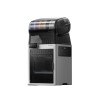
Bambu Lab H3C Combo 3D Printer with AMS (Global Version)
12 Month Warranty Free Islandwide Delivery△
Rs 1,290,000.00 -
-
-
-
-
-
Anycubic Hardened Steel Nozzle for Kobra X
Rs 3,500.00 -
Anycubic Hardened Steel Nozzle for Kobra S1 Max
Rs 3,500.00 -
Anycubic Brass Nozzle for Kobra 3 Max
Rs 2,600.00 -
-
-
-

Bambu Lab X1 Carbon 3D Printer (China Mainland Version)
12 Month Warranty Free Islandwide...
Rs 395,000.00 Rs 490,000.00
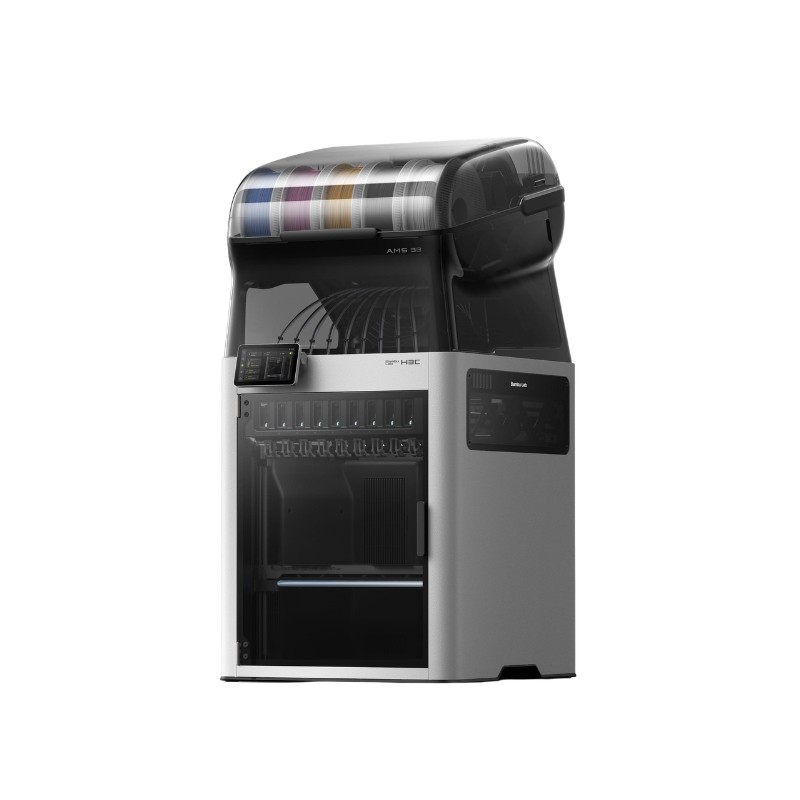
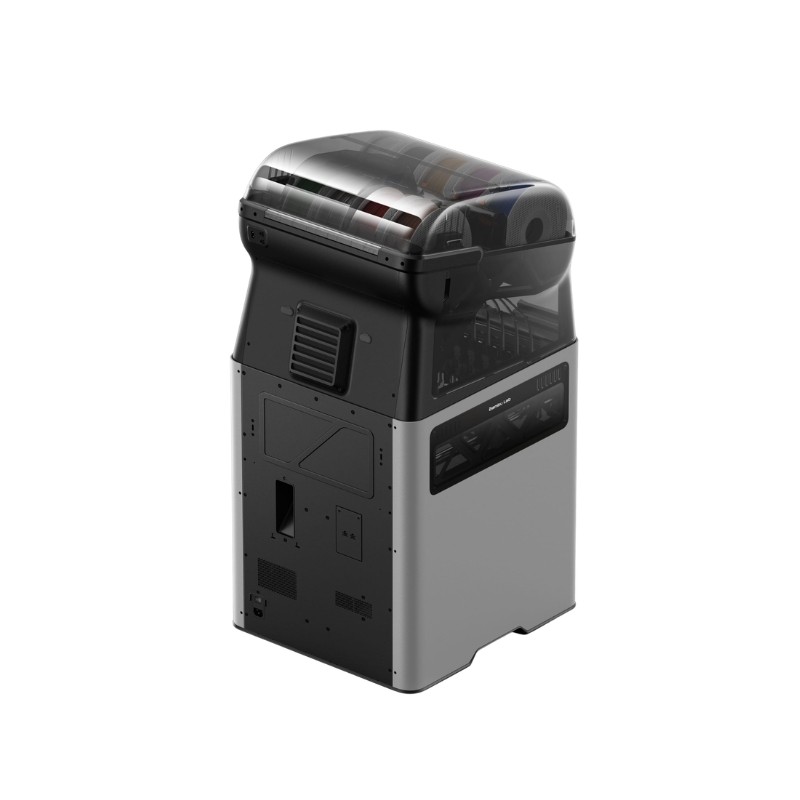
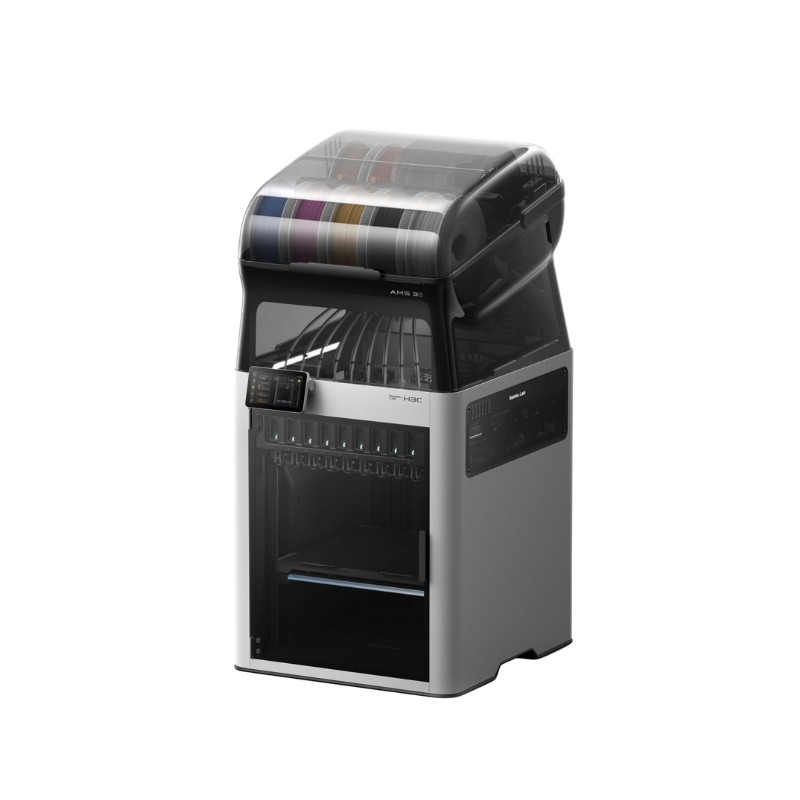
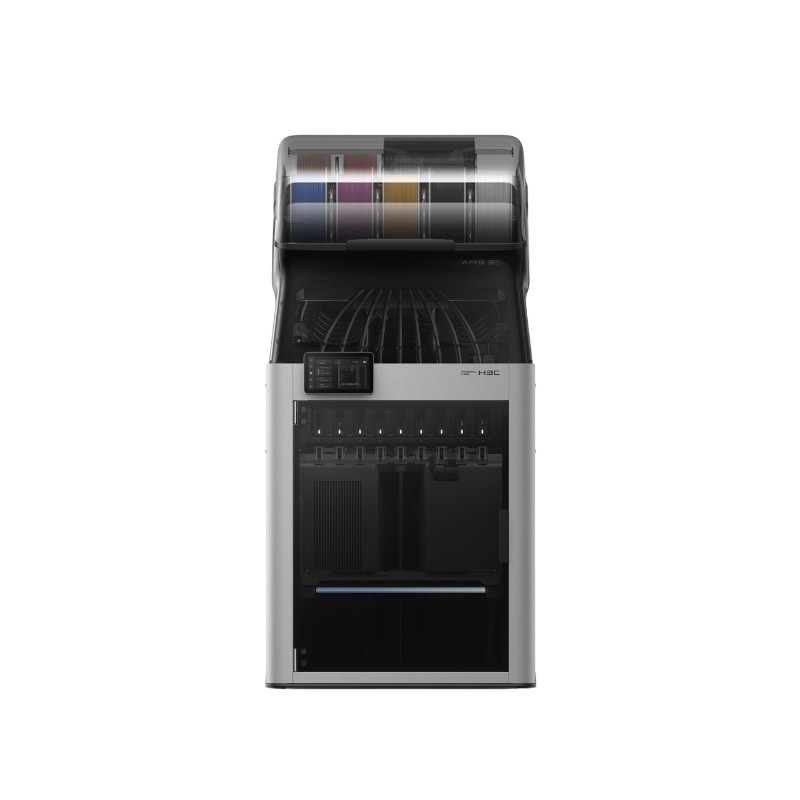
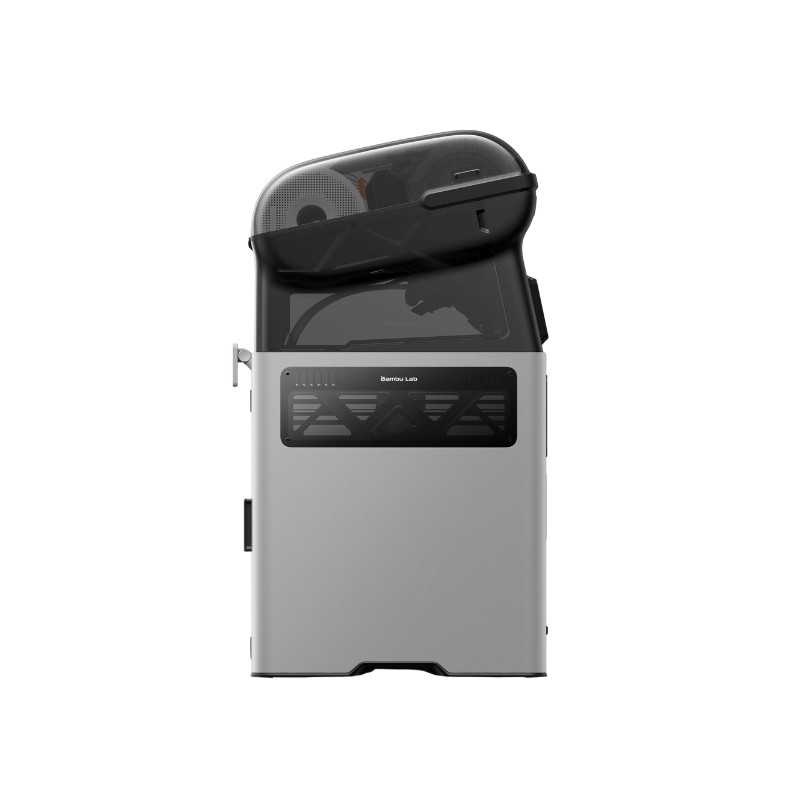
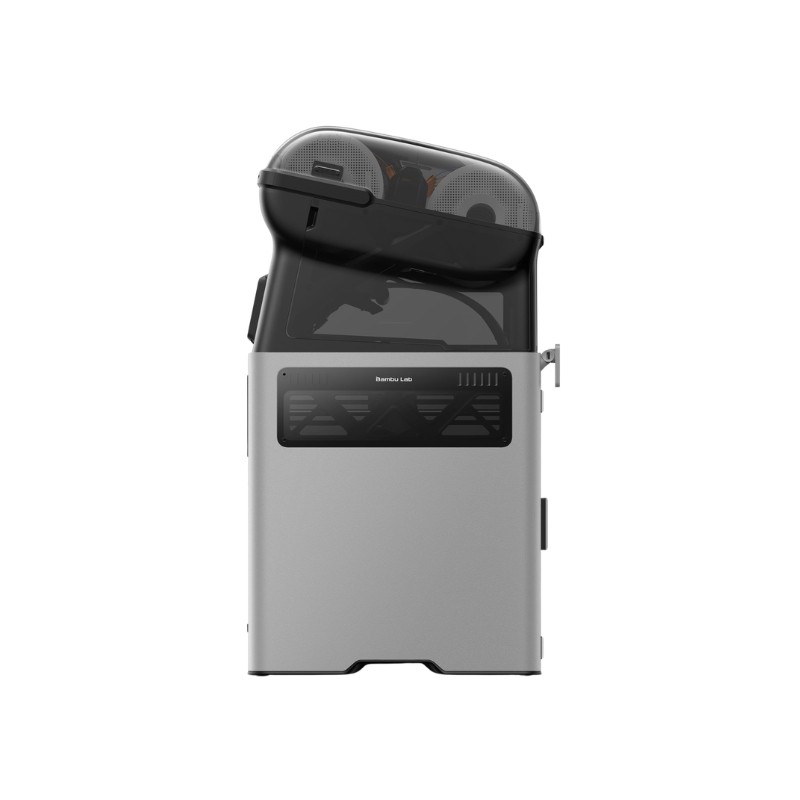
Bambu Lab H3C Combo 3D Printer with AMS (Global Version)
New product
- 12 Month Warranty
- Free Islandwide Delivery
△
This product is no longer in stock
Availability date: 2027-01-09
- Remove this product from my favorite's list.
- Add this product to my list of favorites.
More info
Version: Global Version
Set: Standard Set
The Bambu Lab H3C Combo is a next-generation multi-material FFF 3D printer built around Bambu Lab's Swaptek™ automatic tool-changing architecture. Instead of repeatedly unloading and reloading filament through a single nozzle, the H3C can keep up to nine dedicated PrintTools loaded and ready, allowing different materials, colors, and even nozzle sizes to be used within the same print.
The Combo includes the integrated AMS 3H filament-management system, which stores and automatically feeds up to nine filament paths while also providing sealed storage, RFID recognition, filament inventory management, and high-temperature drying. Combined with Swaptek and Active Pre-Heat, the H3C can complete a PrintTool change in approximately 3.4 seconds and resume printing with the new material in under 6 seconds.
With a 330 × 320 × 325mm build volume, 350°C hardened-steel nozzles, 120°C heated bed, actively heated 65°C chamber, hardened-steel extrusion components, and support for both 1.75mm and 2.85mm filament, the H3C is designed for advanced multicolor, multi-material, engineering-material, and flexible-filament printing.
This listing is for the Global Version of the Bambu Lab H3C Combo.
Key Features
Swaptek™ automatic nine-PrintTool changing architecture
Integrated AMS 3H with nine filament paths
Material-to-print switching in under 6 seconds
Supports different materials and nozzle sizes within one print
330 × 320 × 325mm build volume
Maximum nozzle temperature of 350°C
Active dual-zone chamber heating up to 65°C
Supports both 1.75mm and 2.85mm filament
Swaptek™ Nine-Tool Architecture
Swaptek is the core technology behind the H3C.
Rather than routing different materials through one shared hotend, the system provides up to nine PrintTools, each with its own:
Filament path
Hotend
Heater
Nozzle
Material connection
This means each material can remain loaded and ready rather than being completely retracted every time the printer changes color or material.
The result is substantially faster switching and considerably less filament handling during complex multi-material jobs.
Under 6-Second Material Switching
Bambu Lab specifies a complete material-to-print switching time of under:
6 seconds
The physical PrintTool change itself can take approximately:
3.4 seconds
Active Pre-Heat prepares the next PrintTool while the current tool is still printing, reducing the time spent waiting for the incoming nozzle to reach temperature.
This makes frequent material switching significantly more practical for detailed multicolor models and complex multi-material parts.
Nine Materials Ready to Print
The integrated AMS 3H provides nine filament paths matched to the H3C's nine-tool system.
Each filament can remain assigned to its own PrintTool, allowing the printer to move between materials without repeatedly unloading one filament and feeding another through the same nozzle.
This is particularly useful for:
Multicolor models
Different support materials
Flexible and rigid material combinations
Different engineering materials
Mixed nozzle-size printing
Functional multi-material components
Mixed Nozzle Sizes in One Print
The H3C can carry PrintTools with different nozzle diameters at the same time.
Supported nozzle sizes include:
0.2mm
0.4mm
0.6mm
0.8mm
Bambu Studio can assign different portions of a model to different nozzle sizes.
For example:
0.2mm for very fine lettering or details
0.4mm for normal model geometry
0.6mm or 0.8mm for larger sections requiring higher flow
This allows detail and printing speed to be optimized within the same model instead of forcing the entire print to use one nozzle diameter.
AMS 3H Integrated Filament System
The AMS 3H is integrated directly into the H3C platform rather than operating as a conventional external four-spool material box.
It provides:
Nine filament positions
Automatic filament loading
Automatic filament routing
RFID filament identification
Filament inventory management
Remaining-material tracking
Protected filament storage
Integrated filament drying
Dedicated TPU feeding paths
When compatible Bambu filament is inserted, RFID information can be recognized and synchronized with the printer and slicer.
Automatic Filament Loading
Loading filament is designed to require minimal manual routing.
Insert the filament into one of the nine AMS 3H positions and the system can detect the material, route it through the correct path, and engage it with the corresponding PrintTool.
This simplifies preparation when multiple materials are used in one job.
Two Integrated 85°C Drying Positions
The AMS 3H contains two dedicated filament-drying positions capable of reaching temperatures up to:
85°C
The system can dry filament while the printer is operating, allowing material preparation to continue without stopping production.
The higher drying temperature is suitable for demanding moisture-sensitive materials including compatible:
PA
PC
Engineering polymers
Carbon-fiber-filled materials
Drying temperature and time should always follow the recommendations for the specific filament.
Sealed Filament Storage
AMS 3H is designed as an enclosed filament-storage system that helps reduce exposure to ambient moisture.
Keeping filament protected is particularly important for hygroscopic engineering materials that can absorb moisture quickly and suffer from:
Popping during extrusion
Rough surfaces
Stringing
Poor layer bonding
Reduced mechanical properties
FlexFeed Extruder
The H3C introduces Bambu Lab's FlexFeed extrusion system.
FlexFeed supports both:
1.75mm filament
2.85mm filament
The larger 2.85mm format is particularly useful for very soft flexible filament because the thicker filament is more resistant to buckling while being pushed through the extrusion path.
Soft TPU Down to 75A
With Bambu Lab's dedicated 2.85mm flexible filament, the H3C can print TPU as soft as approximately:
75A Shore hardness
Bambu Lab states that the dedicated 2.85mm TPU can achieve up to approximately three times the flow rate of a conventional soft-TPU setup.
This makes the H3C particularly suitable for applications such as:
Wearable components
Flexible grips
Cushions
Protective parts
Flexible joints
Soft functional prototypes
330 × 320 × 325mm Build Volume
The H3C provides a large:
330 × 320 × 325mm
build volume.
This provides enough space for substantial functional models while retaining the advanced nine-tool material system.
It is suitable for:
Large prototypes
Engineering parts
Functional assemblies
Product enclosures
Figurines
Production components
Multi-material models
350°C Hardened-Steel Nozzles
The H3C PrintTools can reach temperatures up to:
350°C
Bambu Lab specifies hardened-steel nozzles as standard, making the system suitable for both conventional and abrasive engineering materials.
Compatible material families include:
PLA
PETG
PCTG
TPU
EVA
PE
PP
PHA
PVA
BVOH
ABS
ASA
HIPS
PA
PAHT
PC
PET
PPA
PPS
Carbon-fiber-reinforced materials
Glass-fiber-reinforced materials
Actual suitability depends on the selected nozzle, filament profile, chamber conditions, and manufacturer recommendations.
Active Dual-Zone Chamber Heating
The H3C provides active chamber heating up to:
65°C
Rather than depending only on heat from the bed and hotend, the printer actively controls chamber temperature.
Bambu Lab uses a dual-zone heating arrangement to improve temperature consistency throughout the build space.
This is particularly beneficial when printing engineering materials that are sensitive to rapid cooling and thermal contraction.
Reduced Warping with Engineering Materials
Maintaining a controlled chamber temperature helps engineering materials cool more evenly during printing.
This can reduce problems such as:
Warping
Corner lifting
Layer splitting
Internal thermal stress
Delamination
Materials such as ABS, ASA, PC, PA, and fiber-reinforced engineering polymers can particularly benefit from controlled chamber heating.
120°C Heated Bed
The heated build platform reaches temperatures up to:
120°C
This provides the bed temperature required by a broad range of engineering filaments.
The correct build-plate surface and filament-specific bed temperature should always be selected according to the material being printed.
High-Speed Motion System
The H3C uses a redesigned motion platform with the toolhead and X-axis assembly approximately 40% lighter than the corresponding H2D system.
Bambu Lab specifies motion capability up to:
1,400mm/s travel speed
25,000mm/s² acceleration
The reduced moving mass helps the printer accelerate rapidly while controlling vibration and ringing.
Actual printing speed depends on geometry, nozzle size, layer height, material flow, and quality requirements.
Optional High-Flow Nozzles
Optional high-flow PrintTools allow the H3C to take greater advantage of its high-speed motion system when the model and filament permit.
Higher volumetric flow reduces the chance that hotend melt capacity becomes the limiting factor during fast printing.
Four-Layer Cooling System
The H3C combines multiple cooling systems to manage both printed parts and printer temperature.
The system includes:
Toolhead part cooling fan
Dual chamber auxiliary cooling fans
Dedicated PrintTool cooling
Chamber ventilation fan
These systems work together to provide strong cooling for overhangs and bridges while maintaining appropriate operating temperatures for the PrintTools and build chamber.
Full Automatic Calibration
The H3C automates important calibration tasks before printing.
Automatic functions include:
PrintTool docking calibration
Tool offset compensation
Bed leveling
PrintTool alignment
Vision-assisted verification
This is particularly important on a nine-tool system because even small positional differences between PrintTools could otherwise create visible misalignment between colors or materials.
Dual-Camera Monitoring
The H3C uses dual-camera monitoring for print observation and AI-assisted failure detection.
The cameras provide multiple views of the printing area, allowing the system to monitor printing conditions more effectively.
The printer can help identify issues such as:
Spaghetti failures
Abnormal printing
Purge-bin problems
Selected tool-changing faults
An optional BirdsEye camera can provide an additional top-down view and another angle for monitoring and time-lapse recording.
Intelligent HMS Diagnostics
The H3C includes Bambu Lab's updated Health Management System with MiniWiki-style troubleshooting.
Instead of presenting only an error code, the system is designed to:
Identify the fault
Narrow down possible causes
Explain the problem
Provide repair or troubleshooting steps
Guidance can be displayed directly through the printer interface.
Expandable Beyond Nine Materials
The nine PrintTools do not necessarily limit the machine to nine filament spools.
Bambu Lab states that an older-generation compatible AMS can be connected through PrintTool No.1 to expand the system to:
Up to 24 filament spools
This allows additional colors or materials to be available within a single workflow.
An AMS 2 Pro or AMS HT can also be added when additional filament drying or storage capacity is required.
Additional AMS hardware is optional and not included with the standard H3C Combo.
More Than 3D Printing
Swaptek is designed as a general automatic tool-changing platform rather than being limited only to extrusion PrintTools.
Bambu Lab has announced optional tools including:
CutTool
DrawTool
DebossTool
These tools can mount through the same automated changing architecture, allowing selected projects to combine printing and additional making processes.
These optional tools are not included with the standard H3C Combo unless separately specified.
Air Filtration
The H3C includes an H11-grade HEPA filtration system as part of its enclosed printing environment.
Filtration helps capture airborne particles generated during printing.
For materials that may emit significant VOCs or fumes, suitable room ventilation should still be provided according to the filament manufacturer's safety recommendations.
Technical Specifications
| Specification | Details |
|---|---|
| Product Type | Multi-Material FFF 3D Printer |
| Brand | Bambu Lab |
| Model | H3C Combo |
| Version | Global Version |
| Tool-Changing System | Swaptek™ |
| Included Material System | AMS 3H |
| PrintTool Positions | 9 |
| Build Volume | 330 × 320 × 325mm |
| Maximum Nozzle Temperature | 350°C |
| Maximum Bed Temperature | 120°C |
| Maximum Active Chamber Temperature | 65°C |
| Standard Nozzle Material | Hardened Steel |
| Supported Nozzle Diameters | 0.2 / 0.4 / 0.6 / 0.8mm |
| Extruder Gear Material | Hardened Steel |
| Supported Filament Diameter | 1.75mm / 2.85mm |
| Maximum Motion Speed | Up to 1,400mm/s |
| Maximum Acceleration | Up to 25,000mm/s² |
| PrintTool Change Time | As Fast as 3.4 Seconds |
| Material-to-Print Switch | Under 6 Seconds |
| AMS 3H Filament Positions | 9 |
| AMS 3H Drying Positions | 2 |
| Maximum AMS 3H Drying Temperature | 85°C |
| Air Filtration | H11 HEPA |
| Machine Dimensions | Approx. 493 × 571 × 587mm |
| Weight | Approx. 36.28kg Including AMS 3H |
Supported Materials
Bambu Lab currently lists support for material families including:
PLA
PETG
PCTG
TPU
EVA
PE
PP
PHA
PVA
BVOH
Support filament
ABS
ASA
HIPS
PA
PAHT
PC
PET
PPA
PPS
Compatible carbon-fiber and glass-fiber reinforced versions of several engineering materials are also supported.
Material compatibility depends on nozzle configuration and the requirements of the specific filament.
Applications
Multicolor 3D printing
Multi-material printing
Engineering prototypes
Functional parts
Soft TPU components
Support-material printing
Complex mechanical assemblies
Figurines and collectibles
Product development
Production parts
Small-batch manufacturing
Print farm operation
Educational and research projects
Different nozzle sizes within one model
Engineering polymer printing
H3C vs Conventional AMS Printing
Traditional single-nozzle AMS printing normally requires the printer to:
Retract the current filament.
Feed the next filament.
Purge the old material from the nozzle.
Restore nozzle pressure.
Resume printing.
H3C keeps separate materials loaded in separate PrintTools.
Swaptek can therefore change the complete PrintTool instead of repeatedly replacing the filament inside one hotend.
The main benefits are:
Faster material switching
Less shared filament-path complexity
Reduced switching overhead
Ability to use different nozzle diameters
Better separation between incompatible materials
Practical use of very different material types within one print
Global Version
This listing is for the Bambu Lab H3C Combo Global Version intended for supported international markets.
It should not be confused with a Mainland China regional version.
Regional account, cloud, application, warranty, and service availability are governed by Bambu Lab's applicable regional systems and policies.
Package Includes
Main system:
1 × Bambu Lab H3C 3D Printer
1 × Integrated AMS 3H Material System
H3C Swaptek PrintTool system
Standard printer accessories and installation components supplied with the Global Version
Filament shown in promotional images is not included unless specifically stated as part of the selected package.
Optional products such as additional AMS units, BirdsEye camera, Vision Encoder, CutTool, DrawTool, DebossTool, Bambu Station, E1 Air Purifier, and optional nozzle configurations are not included unless specifically listed with the selected bundle.
Usage Note
The H3C is an advanced tool-changing system, so material assignment, PrintTool selection, nozzle diameter, and filament configuration should be set correctly in Bambu Studio before printing.
For demanding engineering materials, dry filament according to the manufacturer's recommendations and use the appropriate chamber, bed, and nozzle temperatures.
When using multiple nozzle diameters or materials within the same model, use the corresponding H3C-compatible Bambu Studio workflow so tool offsets, layer heights, purge requirements, and PrintTool changes are generated correctly.
Accessories


30 other products in the same category:
-
Creality K2...
Rs 430,000.00
-
Creality K2...
Rs 490,000.00
-

Creality K2...
Rs 560,000.00
-
Anycubic...
Rs 175,000.00
-

Anycubic...
Rs 205,000.00
-

Anycubic...
Rs 275,000.00
-
Anycubic...
Rs 150,000.00
-
Anycubic...
Rs 240,000.00
-

Anycubic...
Rs 210,000.00
-

Anycubic...
Rs 265,000.00
-
Anycubic...
Rs 320,000.00
-
Anycubic...
Rs 420,000.00
-

Bambu Lab...
Rs 105,000.00
-

Bambu Lab...
Rs 160,000.00
-
Bambu Lab...
Rs 230,000.00
-

Bambu Lab...
Rs 295,000.00
-

Bambu Lab...
Rs 420,000.00
-

Bambu Lab...
Rs 395,000.00 Rs 490,000.00
-
Bambu Lab...
Rs 430,000.00
-
Bambu Lab...
Rs 510,000.00
-

Bambu Lab...
Rs 595,000.00
-

Bambu Lab...
Rs 700,000.00
-

Bambu Lab...
Rs 970,000.00
-

Bambu Lab...
Rs 1,170,000.00
-
Bambu Lab...
Rs 98,000.00
-

Bambu Lab...
Rs 120,000.00
-
Bambu Lab...
Rs 185,000.00
-

Bambu Lab...
Rs 210,000.00
-
Snapmaker...
Rs 420,000.00
-

Elegoo...
Rs 1,250,000.00