

No products
High-Speed PLA
- 3D Printing
- 3D Printers
- 3D Printer Parts
- Nozzles
- Hotends
- Extruders
- Bowden Tubes and Connectors
- Nozzle Wipers
- Filament Cutters
- Build Platforms and Parts
- 3D Printer Motherboards
- 3D Printer Displays
- Power Supply
- Motors and Parts
- Sensors, Limit Switches and Wires
- Fans and Parts
- Belts and Pulleys
- Bearings
- Structural Parts
- Filament Storage and Dryer
- Post Processing Equipment
- Multi Material Systems
- Multi Material Systems Parts
- Enclosure
- Lubricant
- Tools
- Print Kits
- Other
- 3D Filaments
- Resins
- 3D Scanners
- 3D Scanner Parts
- Machines
- CNC
- Manual
- CNC Parts
- Aluminum Extrusion
- Linear Shafts and Parts
- Linear Rails and Blocks
- Lead Screws and Parts
- Ball Screws and Parts
- Racks and Pinions
- Gears
- Bearings
- Couplings
- Belts
- Pulleys
- Belt Pulley Accessories
- Springs
- Screws Nuts Bolts
- Hardware
- CNC Controllers
- CNC Controller Parts
- CNC Motors and Drivers
- Power Supplies
- CNC Wires and Connectors
- Drag Chains
- Sensors and Switches
- Indicators
- Pneumatics, Water and Oil
- Dust Collectors
- Clamps
- Bits
- Plasma
- Lasers
- PLC and HMI
- Other
- Tools
- Power Tools
- Drills
- Rotary & Demolition Hammers
- Grinders
- Jigsaw
- Circular Saw
- Miter Saw
- Table Saw
- Electric Planer
- Trimmer and Router
- Electric Sander
- Electric Polisher
- Marble Cutter
- Cut Off Saw
- Welding Machine
- Air Compressors
- Electric Spray Gun
- High-Pressure Washer
- Air Blower
- Vacuum Cleaner
- Soldering Iron
- Heat Gun
- Glue Guns
- Electric Garden Tools
- Other Power Tools
- Cordless Tools
- Air Tools
- Hand Tools
- Measuring Tools
- Safety Tools
- Tool Accessories
- Power Tools
- Packaging
New products
-
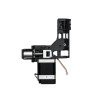
Creality Y Axis Motor Kit Assembly for K2 Plus
Rs 23,000.00 -
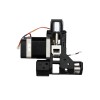
Creality X Axis Motor Kit Assembly for K2 Plus
Rs 23,000.00 -
Creality CR Touch Auto Bed Leveling Sensor
Rs 10,200.00 -
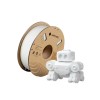
Anycubic PLA+ 3D Printer Filament 1.75mm 1kg
Rs 5,600.00 -
-
Bambu Lab Hotend Heating Assembly for H2D Right
Rs 12,400.00 -
-
Bambu Lab Hotend Heating Assembly for X2D Right
Rs 12,700.00 -
Bambu Lab Hotend Heating Assembly for X2D Left
Rs 12,700.00 -
Bambu Lab Hotend Heating Assembly for A2L
Rs 12,500.00 -
Bambu Lab Part Cooling Fan for H2D and H2C
Rs 10,400.00 -
Bambu Lab Part Cooling Fan for A2L
Rs 5,100.00
-
TWO TREES 202x128mm Magnetic Flexible Spring Steel Sheet Build Surface for Resin Printers
Rs 1,450.00 -50% Rs 2,900.00
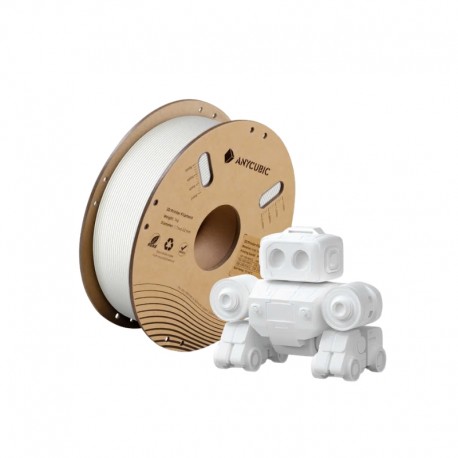
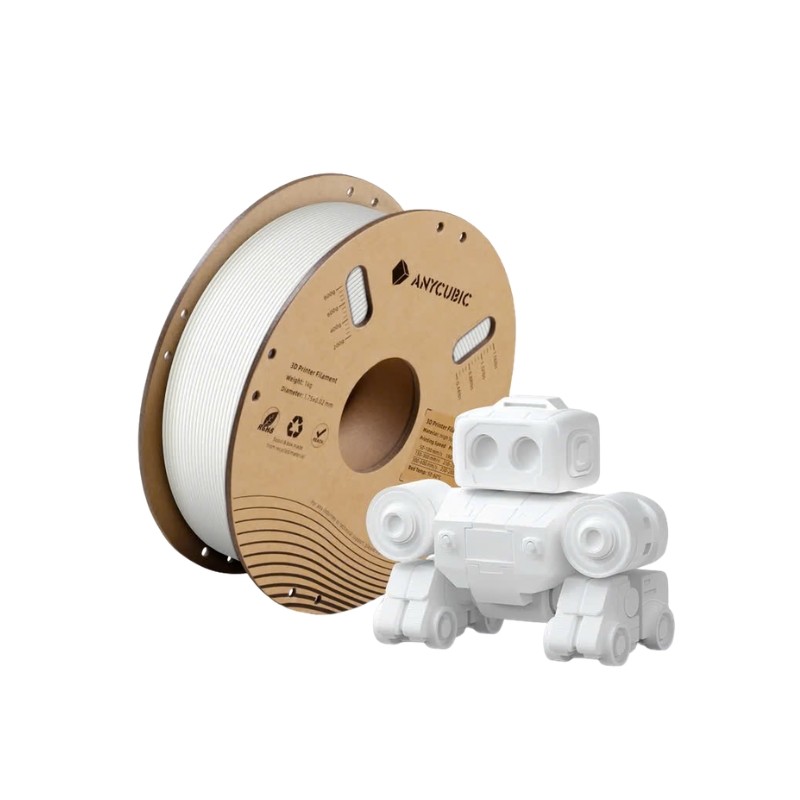
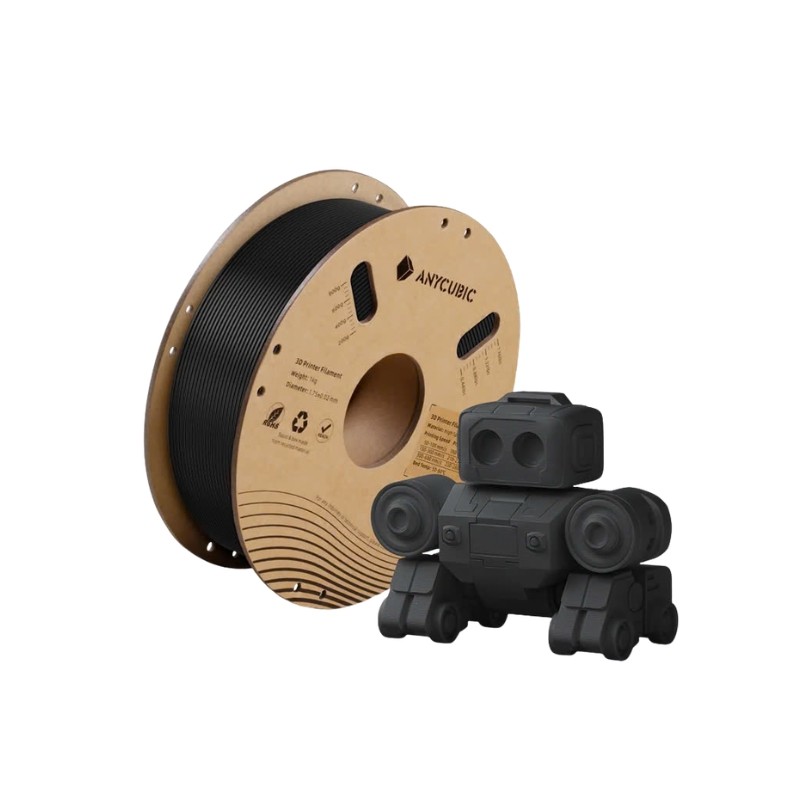
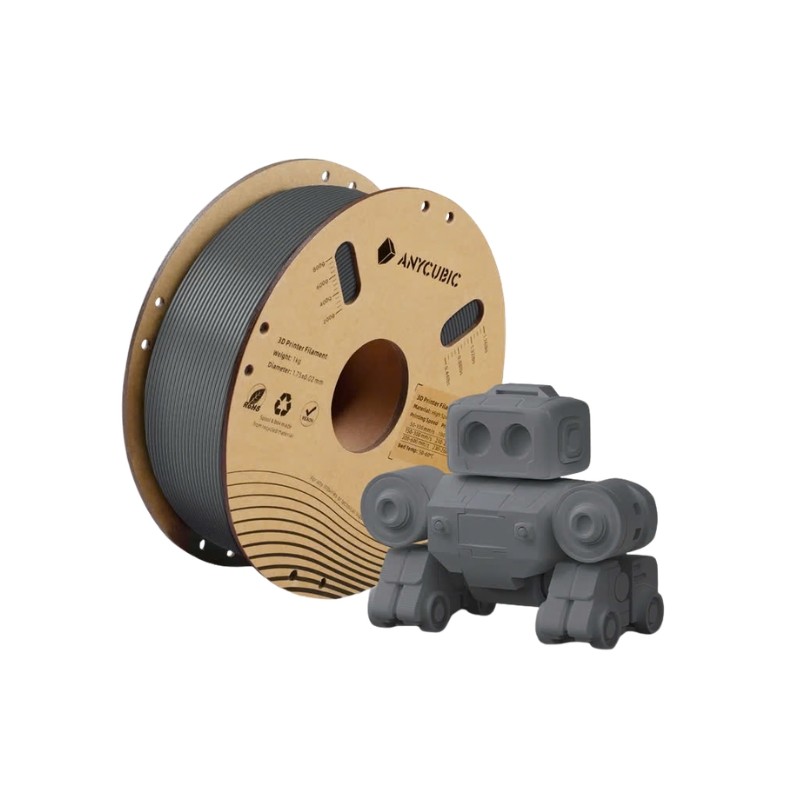
Anycubic PLA+ 3D Printer Filament 1.75mm 1kg
New product
This product is no longer in stock
- Remove this product from my favorite's list.
- Add this product to my list of favorites.
More info
Anycubic PLA+ is an enhanced PLA filament designed to provide greater toughness and durability while retaining the straightforward printing characteristics that make PLA suitable for everyday FDM 3D printing.
With a consistent 1.75mm diameter, low shrinkage, reliable extrusion, and a recommended printing speed of 50–200mm/s, PLA+ is suitable for functional prototypes, toys, decorative models, educational projects, household parts, and general-purpose printing.
Compared with standard PLA, Anycubic PLA+ is formulated to provide improved toughness and better resistance to breakage, making it a practical option when a model needs more durability without moving to more demanding engineering materials.
Key Features
Enhanced PLA formulation with improved toughness
1.75mm filament diameter
Tight diameter tolerance below ±0.02mm
Recommended print speed of 50–200mm/s
Easy to print with standard PLA-style settings
Low shrinkage and reliable dimensional stability
Wide selection of vibrant colors
Intelligent filament identification on compatible Anycubic systems
Improved Toughness Compared with Standard PLA
Anycubic PLA+ is formulated to provide increased toughness while maintaining the ease of printing associated with PLA.
The improved mechanical characteristics make it suitable for parts that may experience more handling or occasional impacts than purely decorative models.
Typical applications include:
Functional prototypes
Toys
Brackets and holders
Household accessories
Educational models
Mechanical mock-ups
Decorative pieces
It remains a general-purpose filament rather than a replacement for specialized high-temperature or engineering materials.
Smooth and Consistent Extrusion
Anycubic specifies a filament diameter tolerance of less than ±0.02mm.
Consistent filament diameter helps maintain stable material flow through the extruder and hotend, reducing variation in extrusion width and supporting cleaner printed surfaces.
Careful winding and consistent material production also help reduce feeding interruptions during longer prints.
Easy to Print
PLA+ uses familiar PLA-style printing conditions and does not normally require a heated chamber.
Anycubic recommends a nozzle temperature of 190–230°C and a heated bed temperature of 55–65°C.
This makes the material suitable for both new users and experienced operators who want reliable general-purpose filament without complicated printing requirements.
Printing Speeds up to 200mm/s
Anycubic recommends print speeds between 50 and 200mm/s.
This allows PLA+ to be used effectively on both conventional and modern faster FDM printers.
Actual practical speed depends on:
Hotend flow capability
Nozzle diameter
Layer height
Model geometry
Cooling performance
Printer acceleration
Desired surface quality
Anycubic specifies a maximum volumetric flow rate of approximately 12mm³/s for the current PLA+ formulation.
Low Shrinkage and Good Dimensional Stability
Like conventional PLA, PLA+ has relatively low thermal shrinkage.
This helps reduce issues such as:
Corner lifting
Warping
Dimensional distortion
First-layer separation
The material is therefore suitable for open-frame desktop printers and does not normally require active chamber heating.
Improved Mechanical Performance
Anycubic publishes the following representative mechanical properties for its current PLA+ formulation under specified test conditions:
| Property | Specification |
|---|---|
| Young's Modulus | 2790 ± 250MPa |
| Tensile Strength | 45 ± 5MPa |
| Elongation at Break | 12 ± 1% |
| Bending Modulus | 3980 ± 360MPa |
| Bending Strength | 82 ± 8MPa |
| Izod Impact Strength – X-Y | 28 ± 1kJ/m² |
| Tensile Strength – Z | 23.8 ± 0.4MPa |
Actual strength of a printed component depends heavily on print orientation, wall thickness, infill, layer bonding, nozzle temperature, and model design.
Intelligent Filament Identification
Current Anycubic PLA+ supports intelligent filament identification on compatible Anycubic printing systems.
Compatible systems can automatically recognize filament information, simplifying material setup and helping streamline the printing workflow.
No additional setup is required when used with supported hardware.
PLA+ can still be used normally on printers that do not support intelligent identification.
ACE Compatible
Anycubic lists PLA+ as compatible with its ACE material-management ecosystem.
On supported Anycubic printers, the filament can be used in compatible automatic feeding and multicolor printing configurations.
Compatibility with individual ACE generations and printer combinations should be confirmed for the specific machine setup.
Reusable Spool System
Current Anycubic PLA+ supports Anycubic's reusable filament spool system.
The threaded spool design can be reused with compatible spool-free filament refills, helping reduce unnecessary spool waste.
Filament may also be supplied in different packaging or spool revisions depending on production batch and selected market.
Wide Color Selection
Anycubic PLA+ is available in a broad range of colors.
Current official options include:
Black
White
Bright Red
Red
Brown
Grey
Texture Grey
Texture Silver
Blue
Tropical Turquoise
Green
Green Flash
Spring Leaf
Yellow
Orange
Pink
Peach Pink
Purple
Interstellar Violet
Beige
Available colors depend on current stock and selected variant.
Technical Specifications
| Specification | Details |
|---|---|
| Product Type | PLA+ 3D Printer Filament |
| Brand | Anycubic |
| Material | PLA+ |
| Filament Diameter | 1.75mm |
| Diameter Tolerance | < ±0.02mm |
| Net Weight | 1kg |
| Recommended Nozzle Size | 0.2mm or Larger |
| Recommended Nozzle Temperature | 190–230°C |
| Recommended Bed Temperature | 55–65°C |
| Recommended Print Speed | 50–200mm/s |
| Maximum Volumetric Flow | 12mm³/s |
| Density | Approx. 1.21g/cm³ |
| Melt Index | 4–10g/10min at 190°C / 2.16kg |
| Melting Point | Approx. 162°C |
| Heat Deflection Temperature | Approx. 50°C at 0.45MPa |
| Intelligent Identification | Supported |
| ACE Compatibility | Supported |
| Reusable Spool | Supported |
Recommended Print Settings
| Setting | Recommended Value |
|---|---|
| Nozzle Temperature | 190–230°C |
| Heated Bed | 55–65°C |
| Print Speed | 50–200mm/s |
| Nozzle Diameter | 0.2mm or Larger |
| Maximum Volumetric Flow | Approx. 12mm³/s |
| Drying if Required | 45–50°C for 6–8 Hours |
These values are manufacturer starting recommendations. Individual printers and colors may require minor tuning.
Applications
Functional prototypes
Toys
Figurines
Decorative models
Educational projects
Product prototypes
Household accessories
Organizers
Brackets and holders
Signs and lettering
Architectural models
Cosplay parts
Hobby projects
Small-batch production
General-purpose FDM printing
Compatibility
Anycubic PLA+ is suitable for FDM / FFF printers that use 1.75mm filament.
Compatible printer families include suitable models from:
Anycubic
Bambu Lab
Creality
Elegoo
Flashforge
Prusa
QIDI
Snapmaker
Other compatible 1.75mm FDM printers
Anycubic confirms that the filament can still be used on printers without intelligent filament identification.
Drying and Storage
Anycubic recommends drying PLA+ before printing when necessary.
Recommended drying conditions are approximately:
45–50°C
6–8 hours
Moist filament may cause:
Popping during extrusion
Increased stringing
Rough surface finish
Inconsistent extrusion
Reduced layer quality
After opening, keep the filament sealed in a dry container or filament storage box with desiccant when not in use.
Package Includes
1 × Anycubic PLA+ Filament Spool
Filament Diameter: 1.75mm
Net Weight: 1kg
Usage Note
For the best results, begin with Anycubic's recommended temperature and speed ranges, then fine-tune according to the printer, nozzle size, model geometry, and selected color.
Although PLA+ offers improved toughness compared with standard PLA, its heat resistance remains within the PLA material class. It is therefore not recommended for parts that will be continuously exposed to high temperatures near or above its heat-deflection range.
5 other products in the same category:
-

eSUN...
Rs 5,000.00
-

eSUN...
Rs 5,400.00
-

Creality...
Rs 4,900.00
-

TWO TREES...
Rs 1,500.00
-

Creality...
Rs 4,700.00